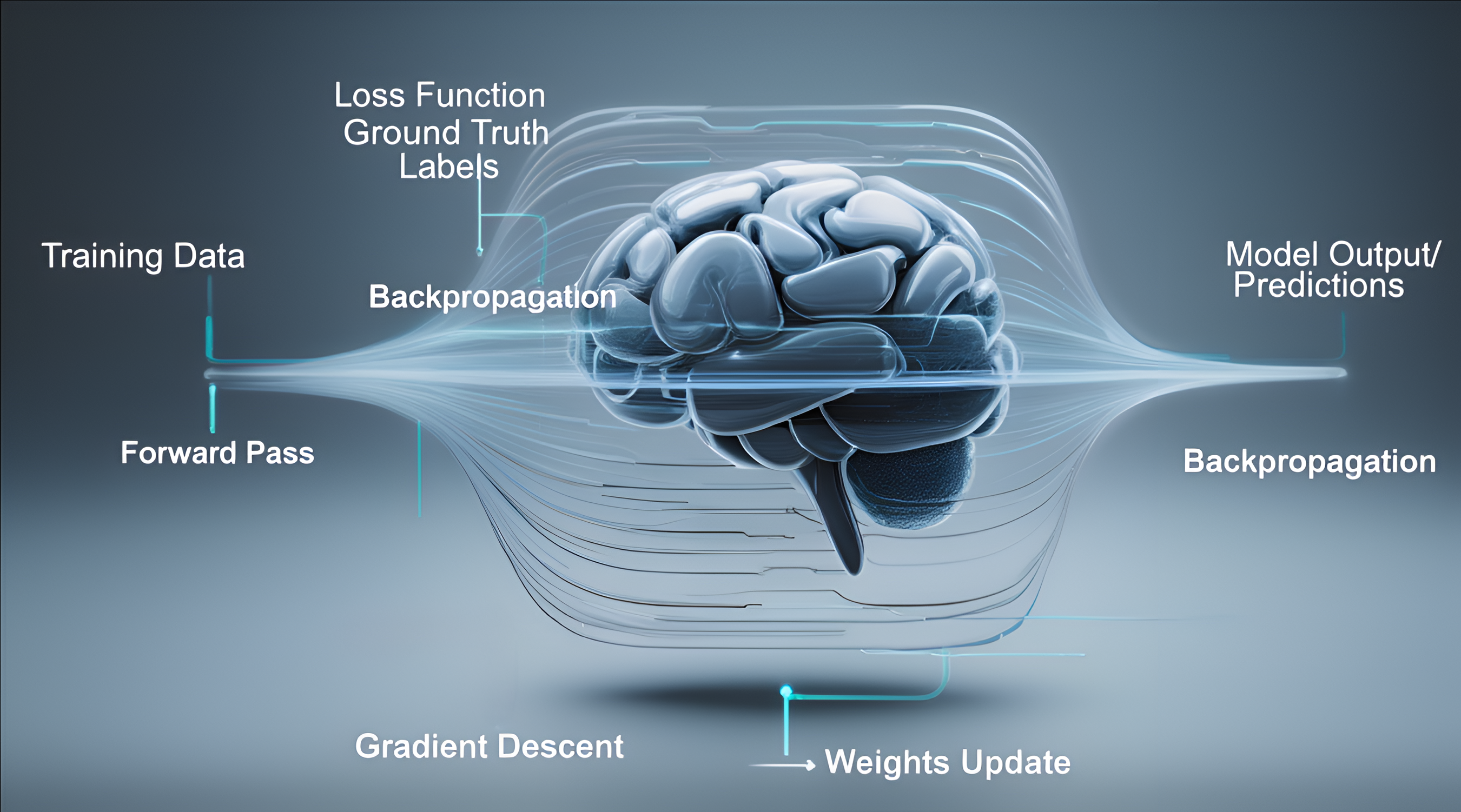
Hyperparameters: Why They Remain More Important Than the Algorithm in 2026

Table of Contents
“While most developers focus on choosing the latest algorithm, the real performance gap lies in hyperparameter optimization. This article explores why the "secret sauce" of machine learning isn't just the model you pick, but the invisible settings you dial in before training begins.”
Introduction
In the rapidly advancing world of machine learning, one question tends to dominate early conversations about building high-performing models: Which algorithm should we choose? Neural networks? Random forests? Transformers? Gradient boosting?
While selecting the right algorithm matters, its importance is often overstated. In production environments from powering recommendation engines at tech giants to enabling predictive maintenance in heavy industry the choice of algorithm is rarely the decisive factor behind success.
The real story is more subtle: Two teams can apply the exact same algorithm, train on the same dataset, and run on comparable hardware yet produce models with dramatically different results. The hidden differentiator? Hyperparameters the carefully chosen (or carelessly overlooked) configuration settings that govern how the model learns, rather than what it ultimately learns.
Poorly tuned hyperparameters can lead to overfitting, underfitting, painfully slow convergence, unstable training, or outright failure. Well tuned ones, on the other hand, unlock superior generalization, faster training, greater robustness, and production-grade performance.
If you're wondering exactly what hyperparameters are, how they differ from model parameters, why they exist in so many different forms, and how small changes in them can completely transform model behavior the sections that follow dive deep into all of these questions, with clear explanations, real-world examples, and practical guidance to help you master this often-underestimated aspect of machine learning.
What Are Hyperparameters?
Hyperparameters are configurable values set before training begins and remain fixed throughout the process. Unlike model parameters (e.g., weights in a neural network), which are learned from data during optimization, hyperparameters act as the “rules of the game.” They guide how the algorithm explores the solution space, controls training dynamics, and influences final performance.
Key Characteristics
- A Priori Selection — Chosen before training using domain knowledge, experimentation, or automated tools (no direct data-driven adjustment during a run).
- Static Nature — Remain unchanged during training; altering them requires restarting the process.
- External to the Data — Not learned from the dataset; tuned via validation sets or cross-validation to prevent bias.
- Broad Impact — Affect training speed, stability, resource usage, overfitting prevention, and generalization.
In essence, hyperparameters bridge theoretical algorithm design and practical implementation, turning a generic model into a tailored, high-performing solution for tasks like imbalanced medical diagnostics or large-scale e-commerce personalization.
Common Misconceptions
A frequent error is confusing hyperparameters with model features. For example, the number of layers in a neural network is a hyperparameter (set manually), while weights within those layers are parameters (learned automatically).
Parameters vs. Hyperparameters
These terms are often confused, but they differ fundamentally:
| Aspect | Model Parameters | Hyperparameters |
|---|---|---|
| Source | Learned automatically from training data | Set manually or via search before training |
| Examples | Weights, biases, tree splits | Learning rate, batch size, number of layers |
| Dynamic? | Yes — updated during optimization | No — fixed for the entire training run |
| Purpose | Capture patterns and knowledge from data | Control how the model learns and behaves |
| Tuning Method | Automatic (e.g., gradient descent) | Manual, grid/random search, Bayesian opt. |
| Saved in Model? | Yes — part of the trained model | No — external configuration |
| Sensitivity | Data-dependent; refined automatically | Extremely sensitive; poor choices ruin runs |
Rule of Thumb:
Parameters = What the model knows (learned knowledge)
Hyperparameters = How the model learns (training rules and safeguards)
Classification of Hyperparameters
Hyperparameters fall into two main categories:
1. Hyperparameters for Optimization
These control the training process and efficiency of finding good model parameters.
-
Learning Rate
Determines step size in gradient-based updates.- Too high → overshoots minima, unstable/divergent training
- Too low → slow convergence, stuck in plateaus
- Modern approaches: schedulers (cosine decay, warmup) or adaptive optimizers (Adam) that adjust dynamically.
-
Batch Size
Number of samples processed before a parameter update.- Larger → faster training, stable gradients, higher GPU utilization, but sometimes worse generalization
- Smaller → noisier gradients (helps escape local minima), but slower and more updates
- Trade-off: memory usage, training time, and generalization performance.
-
Number of Epochs
Full passes through the training dataset.- Too few → underfitting
- Too many → overfitting and wasted compute
- Best practice: early stopping on validation loss.
2. Hyperparameters Specific to Model Architecture
These define model structure and capacity (especially critical in deep learning).
-
Number of Hidden Units / Neurons per Layer
Controls representational power. More neurons increase expressiveness but risk overfitting and higher compute cost. -
Number of Layers (Depth)
Deeper models capture complex hierarchies but are harder to train (vanishing/exploding gradients). Requires careful initialization, normalization, and regularization for reliability.
Other common examples: dropout rate, L1/L2 regularization strength, kernel size (CNNs), attention heads (Transformers).
How Hyperparameters Shape Behavior
Hyperparameters fundamentally alter model trajectory. With identical architecture and data, different settings can turn a prototype into a production powerhouse—or render it unusable.
Case Study: Learning Rate
| Level | Behavior | Outcome |
|---|---|---|
| Very Small (1e-5) | Tiny steps, slow progress | Stuck in minima, excessive epochs |
| Appropriate (1e-3) | Balanced, stable convergence | Optimal performance, good generalization |
| Too Large (1e-1) | Overshoots, oscillations/divergence | NaN losses, training failure |
Tip: In large models (e.g., GPT-style), mismatched rates waste millions in compute. Schedulers help balance exploration and precision.
Broader Impacts
- Larger batch sizes → faster but potential generalization gap
- In RL, discount factor balances short- vs. long-term rewards
- Pitfall: Default reliance — always tune domain-specifically.
Critical “Knobs” Engineers Monitor
- Batch Size — Speed vs. generalization trade-off
- Epochs — Early stopping prevents waste
- Regularization (L1/L2, Dropout) — Curbs overfitting
- Momentum/Optimizer Settings — Accelerates convergence in noisy landscapes
Interactions matter (e.g., high LR + low regularization = instability). Tools like TensorBoard visualize effects.
Hyperparameters as Risk Controls
In production, hyperparameters mitigate real-world risks:
- Classification Thresholds — Tune precision/recall (e.g., fraud detection)
- Regularization — Limits overconfidence in noisy/high-stakes domains (healthcare)
- Schedules & Warmup — Ensure stability in large models/autonomous systems
In regulated fields, they become auditable policy levers. Sensitivity analysis quantifies risk.
Professional Best Practices for Tuning
- Baselines — Start with defaults/literature values
- Isolate Variables — Ablation studies reveal interactions
- Automate — Grid/Random Search → Bayesian (Optuna, Ray Tune)
- Validate Rigorously — K-fold CV, beyond-accuracy metrics
- Deployment Focus — Tune for latency, memory, cost (MLOps versioning)
Pitfall: Curse of dimensionality — prioritize sensitive params (e.g., learning rate first).
Conclusion
Algorithms define what is possible in machine learning. Hyperparameters make those possibilities practical, reliable, scalable, and production-ready.
In modern ML, especially at scale, success is engineered through disciplined hyperparameter control. The gap between fragile prototypes and trustworthy deployed systems often comes down to thoughtful tuning. As AutoML advances, human insight into prioritizing and adjusting hyperparameters remains a core skill—mastering it builds systems worthy of high-stakes trust.
References
- Goodfellow, I., Bengio, Y., & Courville, A. (2016). Deep Learning. MIT Press.
- Bergstra, J., & Bengio, Y. (2012). Random Search for Hyper-Parameter Optimization. Journal of Machine Learning Research.
- Chollet, F. (2017). Deep Learning with Python. Manning Publications.
- Domingos, P. (2012). A Few Useful Things to Know About Machine Learning. Communications of the ACM.
- Murphy, K. P. (2022). Probabilistic Machine Learning. MIT Press.
- Sutton, R. S., & Barto, A. G. (2018). Reinforcement Learning. MIT Press.
- Kohavi, R. (1995). A Study of Cross-Validation and Bootstrap for Accuracy Estimation and Model Selection. IJCAI.
- Roy, M. (n.d.). Hyperparameters in Machine Learning Explained. Tutorials Point. https://www.tutorialspoint.com/hyperparameters-in-machine-learning-explained
Author profile: https://www.tutorialspoint.com/authors/mouri-roy-168119493525
Recommended Insights
Continue your journey